
In 2005, a toilet paper maker from Torres Novas, in central Portugal, started selling its paper in black.
It's worth pausing on how strange that is. Toilet paper may be the most commoditized product in any store. People choose it on price, and sometimes on softness. Innovation in the category means going from three plies to four. Nobody wakes up thinking about which toilet paper reflects who they are.
The company was Renova, founded in 1939. Today it reports more than €245 million in revenue, about 60% of it from exports, and it calls itself, with a straight face, "The Sexiest Paper on Earth." Nobody laughs at the line anymore. That's the interesting part.
The black roll explains how Renova got noticed. It doesn't explain why the brand is still standing twenty years later, when most stunts are forgotten in three weeks. For that, you need a map.
01Three ways to lose, and a fourth way out
Picture Renova in the early 2000s. A mid-sized mill in a market squeezed from both ends. Above it, multinationals with advertising budgets larger than its entire revenue. Below it, supermarket private labels selling the same thing for less.
A company in that spot usually has three options, and all three lose slowly.
- Cut prices. You win shelf space and lose margin, one promotion at a time, until there's nothing left to cut.
- Make paper for someone else's brand. The mill stays busy, and the company becomes invisible, at whatever margin the retailer allows.
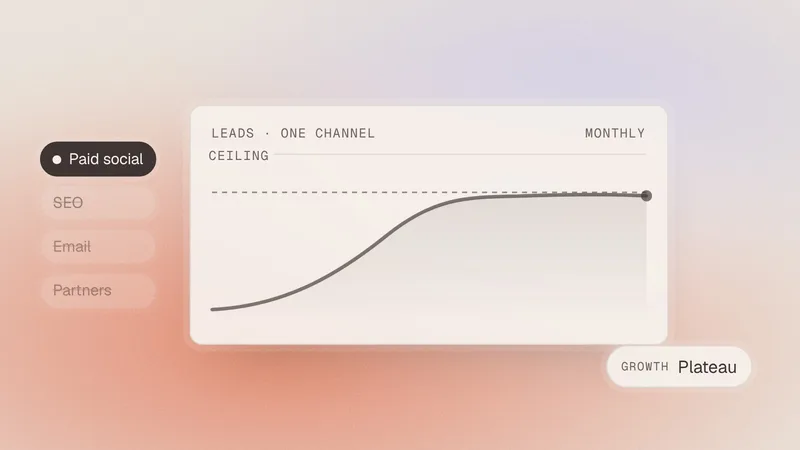
- Innovate on the product. Scented, extra-soft, tubeless. Whatever works gets copied by the big players within a season.
Renova took a fourth route: it changed what the product meant. Black toilet paper, then red, orange, green and fuchsia, in packaging closer to a cosmetics brand than a supermarket aisle.
It worked first as an attention device. Toilet paper is functional, discreet, faintly embarrassing, the opposite of something you show off. Make it black and premium and the brain has no shelf to file it on. Strange things get looked at, and they get talked about. Journalists, who live off that reflex, wrote about it for free all over the world.
At that point, most people would call it a clever PR stunt and move on. We've all seen the pattern: a brand does something surprising, the internet talks about it for three weeks, and then it goes back to being invisible. Buzz feels like success and builds none of its conditions. What makes Renova worth studying is everything that came after the black roll.
02The map: four pillars, two scores, four places to be
In the 1990s, the ad agency Young & Rubicam set out to answer a simple question at an unusual scale: why do some brands grow while others fade? It surveyed consumers across dozens of countries about tens of thousands of brands, and the answer it kept finding rested on four pillars. The tool is called the Brand Asset Valuator, or BAV. It's one of the most useful ways I know to decide what a brand should work on next, and it's surprisingly rarely used.
- Differentiation: what makes you unique. Unique, which isn't the same as better. A brand that looks like the others is just one more option on the shelf.
- Relevance: is this for me? It answers a need people actually have, functional or emotional, admitted or not. You can find a brand fascinating and never buy it.
- Esteem: is it worth something? Perceived quality, being taken seriously even by people who don't buy. It's the slowest pillar to build, and the one you can't simply buy.
- Knowledge: people know the name and understand what it stands for. It's the easiest pillar to buy with media, and the most useless on its own.
The pillars pair up. Differentiation plus relevance gives you strength, your potential to grow. Esteem plus knowledge gives you stature, the credit you hold today. Put strength on one axis and stature on the other and you get a map with four very different places to be.
Renova moved from unknown to leader in two steps
The BAV power grid: strength (differentiation + relevance) against stature (esteem + knowledge)
One caution before using it. Adding the pillars in pairs gives a quick diagnosis, but it hides the detail: a brand that's very different but irrelevant and a brand that's relevant but generic can have the same strength score. They have opposite problems. The quadrant tells you where you are. The four pillars tell you what to fix first.
03Renova's twenty years, read on the map
Before 2005: unknown. Differentiation close to zero, since it was toilet paper like any other. Relevance at the most basic functional level. No particular esteem, and awareness limited to Portugal. Bottom left, the place where you have little to defend because you have little at all. Replaceable, which is worse than bad.
2005: the black roll. Differentiation jumps from nothing to maximum, and awareness follows on the back of the press coverage. But look at the two other pillars. Relevance stays low, because who actually puts black paper in their bathroom? And esteem is still only curiosity. People found Renova amusing, which is a long way from respecting it. The brand moves to the top left: intriguing, promising, fragile.
This is exactly where most brands stop. They got people talking, they mistake attention for preference, and they fade, because curiosity doesn't turn into loyalty by itself.
The long, quiet middle. Renova did something much less glamorous. For years, it built the three pillars it was missing, one deliberate decision at a time.
- Relevance: it widened the range beyond the statement colors, with more classic premium papers and face-care products, and it made the brand easy to buy in ordinary places, including its own online store. Buyable by normal people, in normal situations, without needing a reason.
- Esteem: it leaned fully into "The Sexiest Paper on Earth," a line that only works if every touchpoint takes it seriously, from the packaging to the photography. Esteem can't be declared. It has to be borrowed from people and places that already have it, then proven over time.
- Knowledge: repetition. A consistent identity, packaging recognizable from across a store, and a patient country-by-country expansion, with exports to around 90 countries becoming regular from 2015 and a presence today in more than 70 of them.
Today: leader of its own category. Nobody has taken the designer toilet paper spot. The range is broad, the distribution wide, the brand associated with quality, and the name known well beyond Portugal. Top right, the place where you have everything to defend because you have everything.
04Where are you, and what should you work on?
This is where the map stops being a history lesson. It answers the question every founder, marketer or creator faces sooner or later: what should I be working on right now? The answer depends entirely on where you stand.
| Where you are | What it looks like | What to work on |
|---|---|---|
| Unknown | Nobody knows you, nothing sets you apart | Differentiation first. Find the thing only you can be. |
| Promising niche | Loved by a small circle, unknown or not yet trusted beyond it | Relevance, esteem, knowledge. Widen the offer, borrow credibility, distribute. |
| Leader | Strong on all four pillars | Defend differentiation. Stay relevant as your customers change. |
| Eroding | Everyone knows you, nobody feels anything special | Rebuild differentiation, even at the risk of shocking people. |
Three well-known brands show what each move looks like.
Liquid Death, from niche to scale. Canned water with heavy-metal branding started as an in-joke for a small crowd: maximum differentiation, very little legitimacy. The company then did the work Renova did, faster. Mainstream distribution through retailers like Whole Foods, partnerships with Live Nation and with skater Tony Hawk, and a constant presence well beyond its original audience. Serious distributors stocking it sent a signal the public followed. By March 2024 it was valued at $1.4 billion, with revenue that had gone from $45 million in 2021 to $130 million in 2022, without ever softening its identity.
Benetton, eroding. In the 1980s and 90s, "United Colors of Benetton" was a stance more than a slogan, carried by Oliviero Toscani's provocative campaigns. It worked so well that the whole industry adopted it. Once every brand talks about diversity, a brand built on talking about it first has nothing left of its own. In 2023, Benetton posted a €230 million net loss on about €1.09 billion in revenue, and its losses since 2013 add up to more than a billion euros. Everyone still knows the name.
Jaguar, choosing the shock. In late 2024, Jaguar unveiled one of the most mocked rebrands in recent memory, wiping away decades of British heritage at once. Seen from the map, the logic is easier to follow. Jaguar had been bottom right for years: a name people respected out of nostalgia and bought less and less. When you're in that quadrant, staying still means fading slowly. Whether the bet pays off is another question, but standing still had already been tried.
05The mistake almost everyone makes
One of the most common requests in marketing meetings is some version of "we need to be better known." More reach, more impressions, more posts.
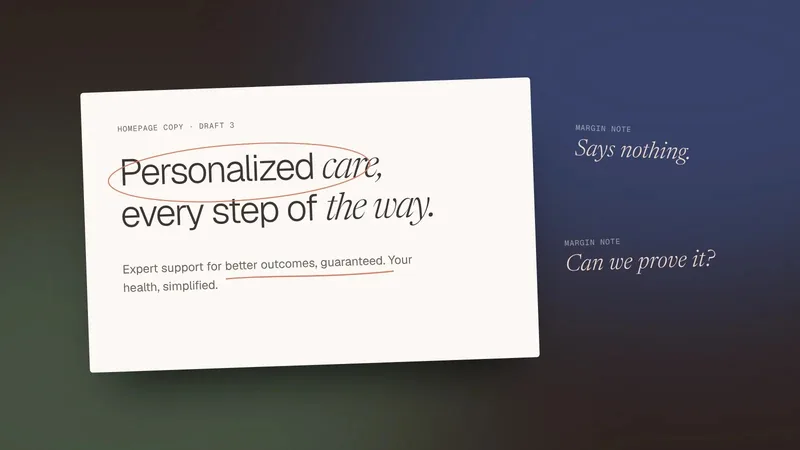
On the map, that's a push on knowledge, the one pillar that's easy to buy and useless on its own. If nothing sets you apart, being better known simply shows more people that you offer nothing special. If you aren't relevant, more awareness converts nobody, and you end up with a famous brand made for no one. LinkedIn is full of this: people posting twice a day, every day, adding noise to the noise and making their lack of a point more visible with each post.
The lesson Young & Rubicam drew from all those brands is that differentiation comes first. It's what starts the movement. You can't build esteem on a void, and you can't build relevance on something generic. Renova understood it with a black roll, and then had the patience to build everything else around it.
Which leaves very little room for the oldest excuse in marketing: "our product is purely functional, nobody cares about the brand." Somebody made toilet paper sexy. Your product has a chance.